
Beware the Rising Tide
Considering human-made art versus artificially-generated 'content'

Though I am bit late to the party; though I am running somewhat to catch a train of discussion that is either still boarding or just leaving the station, I would like to add my thoughts and by implication, vote of importance, to the question/problem of the generation of content online, in this dawn of generative artificial intelligence.
First let’s start with that crude, bland, neutral, utilitarian and appropriate word used so widely these days: content. Once there was nourishment; once there was artistry - now, a ubiquity of ‘content’. It is a dull word but it gets the job done. It is the difference between food and calories, between a car built from scratch and one made by a machine in factories, between a cookie-cutter IKEA furniture set and a hand-made wooden table whose components have been hewn, cut, trimmed, sanded, and stained by one person along with their apprentice, maybe. I think you get the picture. Often times, inference and analogical example are even better stand-ins for exposition or attempts at outright explanation.
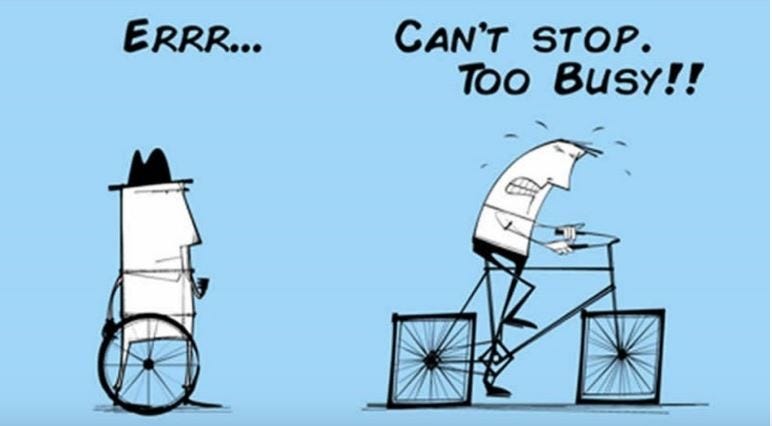
So, in the attention-commodity online economy, where clicks and time spent on page (subject to ads) potentially clicking affiliate links, ‘content’ is king. Whether its the steady stream of one or two videos uploaded a week on a Youtube channel, or one or two (or more) posts a day by way of Facebook, X, Instagram, or worst of all, Tik Tok, clearly we are well into an age of quantity over quality. In a sort of hyper real-time, heedless and co-collaborative continuously reactionary loop, we have diminished our attention spans (see term: ‘scroll’) and are all in danger of continuing to do so to the point of existential reliance on our devices - to remind us to brush our teeth, to get our daily walk in, to feed the cat, to leave for work on time, to administer medicine to Grandpa, even to (finally and ironically) put our device into airplane mode an hour before bed, because apparently we are at a point where we must manually remind (and remind, and remind) ourselves to give the fucking screen a break and be the diurnal mammal with a circadian rhythm we are again, for a short while at least, in order to sleep better, in order to be ‘productive’ again the next day.
What I find particularly trippy about generative artificial intelligence is this: what it has to draw on, all that it has to draw on, is the content of the entirely human uploaded world wide web. By this point in the year 2025, several decades into co-creating the internet as we are, that is certainly a lot to draw on, but the important thing is to note that is it is all second-hand and inferential/referential.
Here’s what I mean by second-hand: all that might inspire us to interact, search, or post anything on the internet (virtual realm) is motivated by something from outside that virtual realm, aka, the real, actual world (simulation/brain in a vat theory cynics please hold) - a thought, a sense impression, a feeling, a survival essential. Sense impressions or sensory input (like the ambient temperature of where you are or the sound of vehicle traffic outside your home) and survival needs (becoming hungry or thirsty or tired) are objective and primary, while thoughts (“look, its snowing outside”) and feelings (feeling anxious while expecting a delivery, or riding a high from a compliment you received at work) are subjective and secondary; they are reactions. The internet, the virtual realm is effectively a diary for the human race, a repository of all the thoughts, feelings, and interactions we care to share or conduct in a not face-to-face manner. One definitive thing I believe we can say about it as a space is that it is inherently second-hand, and only ever operates in or describes the past, even if that latency between post and past have shrunk to the time between your last keystroke and now; the blinking caret or cursor or insertion point that keeps time to your typing marks seconds gone by.
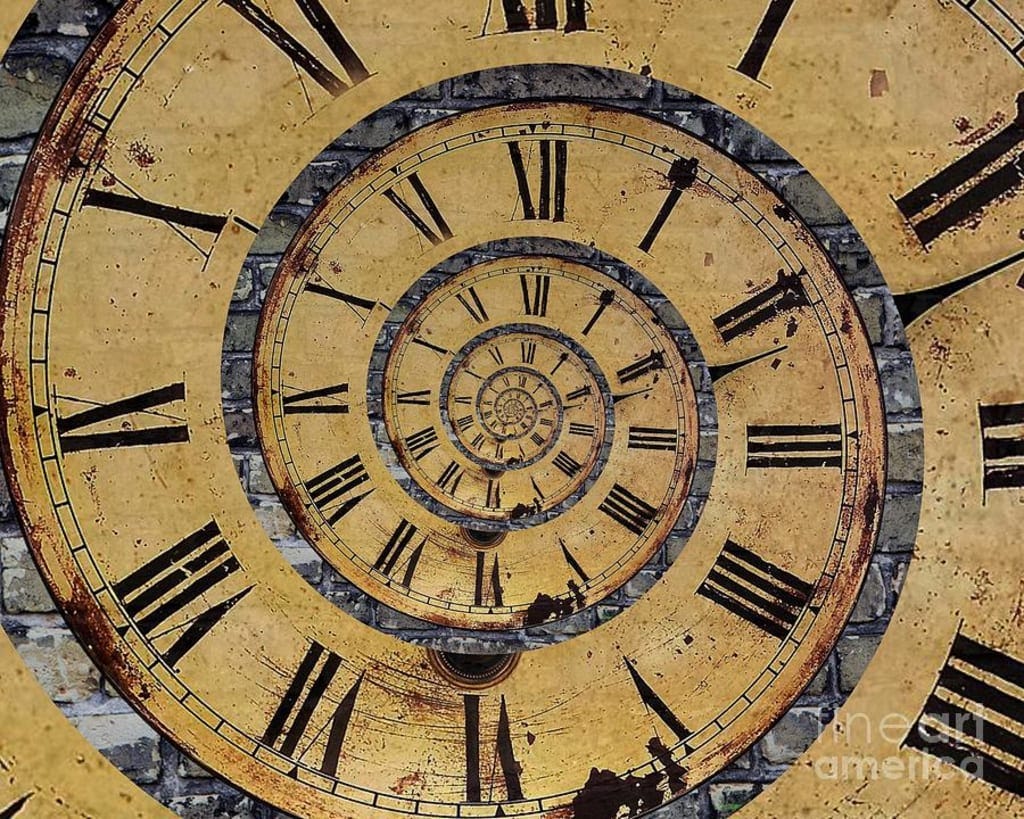
(if you're interested in a deep dive into time as understood by the world's oldest religion)
So there is a sharp, pivotal fundamental difference between what human intelligence and artificial intelligence draw from or are informed by: while there is a world and a universe that we are birthed by/into, are inspired by, react to, contend with, struggle against, are nourished by, and of which, ultimately, we are part, artificial intelligence has but the variable aperture of idiosyncratic human understanding, conflict, chaos, and economy to draw from and be directed by. We, an unreliable narrator, are its entire universe. The extent of generative AI is therefore a meta world, a world within the world. And, smitten with our creation (which is to say, ourselves) I believe we are in great danger of getting lost in it.

When AI has not the sacred, balanced order of the larger world but only the content of the internet to inform it, our eccentricities, we’ll find, become amplified, our mortifying misunderstandings become magnified, our intentions, for good, neutral, or ill, intensified and put on blast. And then, in short order and with inadequate discrimination/oversight, AI begins to use its own hybridized machinations (its content being inherently ‘of the internet’ after all) as equally valid to draw from to inform its subsequent answers and generations. This can and will corrupt human knowledge stored on the internet. For example, a magazine might use AI to write an article about pickleball, or a team of scientists might use AI to help streamline information from study about the cardiovascular benefits of pickleball, and then, could use AI to compose the findings in a research paper (a responsible use of AI would be to use only that streamlining feature, I would argue, saving time without actually putting words in people’s mouths, or, streamlining, not generating). Subsequent AI searches or generations can and will draw from these AI-made articles/content, perhaps indiscriminately (unless scrupulous parameters have been put in place), leading to a telephone game of information degeneration.
The stellar Youtube channel of Kurzgesagt has a really great video explaining this process.
I don’t know what we can do to stop or alter this other than opt out, and/or be intentional and discerning. Human society, made globally communing real fast by the internet, seems too numerous for much consensus at present. We do not seem to have the collective maturity to think it a good idea to limit generative AI; our de facto tech overlords greasing the wheels of government (see here) with tantalizing fractions of their real and speculative profits aren’t done ‘advancing society and making all of our lives easier’ yet. I think this is going to be yet another matter of voluntary, grassroots initiated, 21st century virtual etiquette or hygiene. We mustn’t forget that notions can become popular from the top-down (propaganda) as well as from the bottom-up (‘of the people’).
For more on this large ongoing conversation that humanity is having with itself, piecemeal, here are some of philosopher Erik Hoel’s posts on the matter:

Also, consider removing the automatic AI synopsis from your Google search results. There are a few ways to do so. Give it a quick search and say goodbye to that stupefying trend that none of us have asked for or consented to.
Hey, great read as always; your distinction between nourishment and mere 'content' really makes me think about whether even the most advanced AI could ever truly replicate the depth of a favorite clasic novel I hold in my hands.
oh, and keep on with this vein, sai. this is your ballpark, now